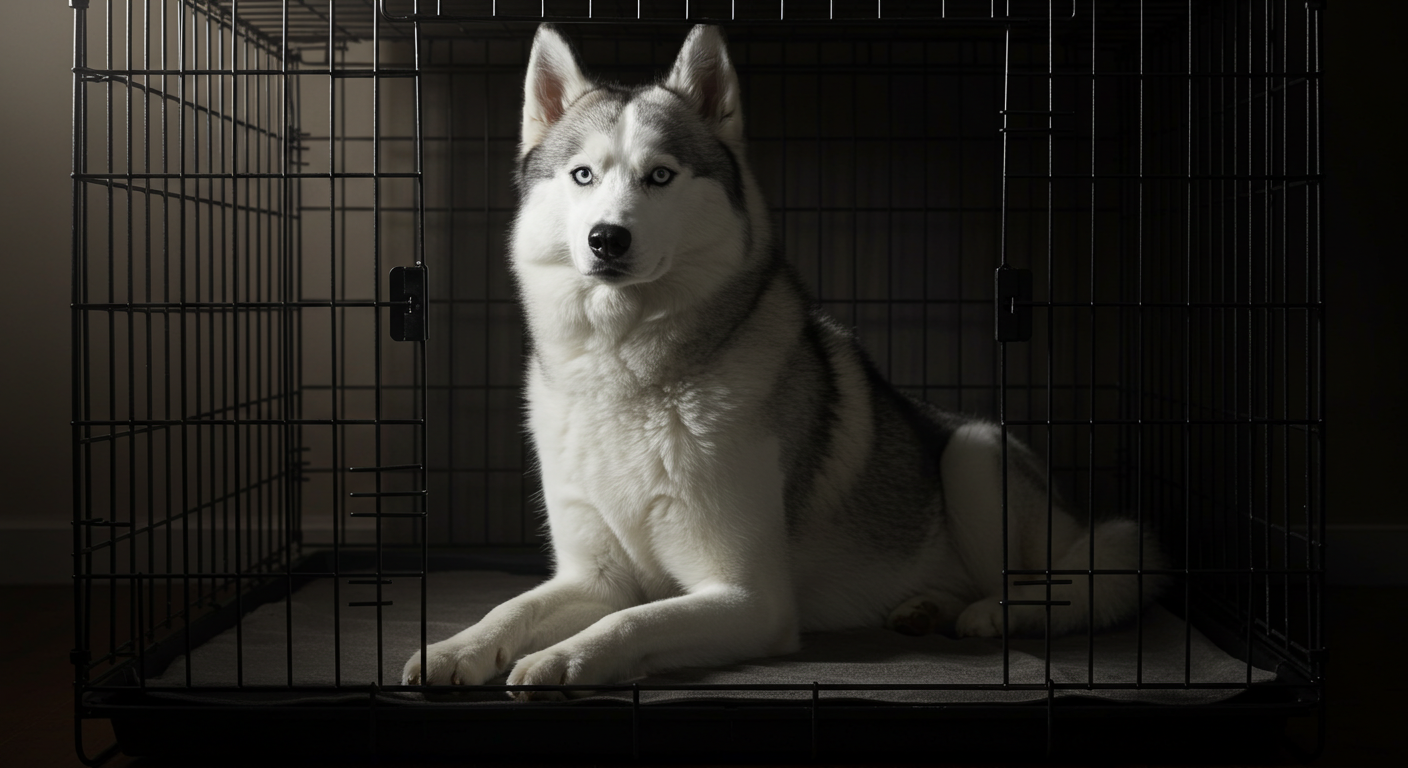
Building a safe and comfortable environment for your dog is essential, and dog crate training is one of the best ways to achieve this. A dog’s crate can serve as a personal haven, a tool for house training, and a means for safely managing your dog’s time. This guide will walk you through everything you need to know to create a cozy den that your furry friend will truly love.
Table of Contents
- What Is Dog Crate Training?
- Benefits of Crate Training
- Choosing the Right Crate
- Steps to Crate Training Success
- Making the Crate Comfortable
- Common Mistakes to Avoid
- When and How to Use the Crate
- The Role of Routine in Crate Training
- Transitioning Out of the Crate
- Answers to FAQs About Crate Training
What Is Dog Crate Training?
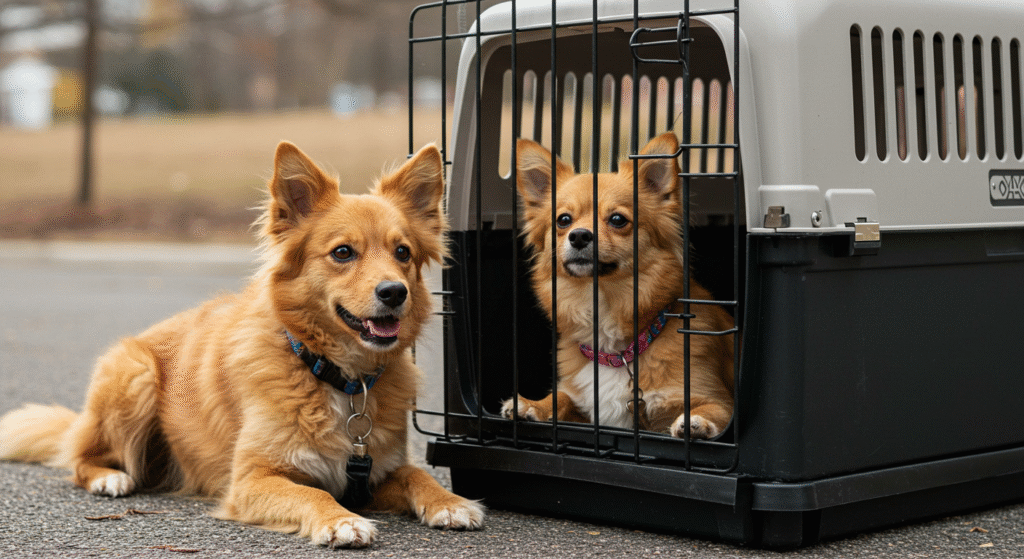
Dog Crate training is the process of teaching your dog to see a crate as a safe and comfortable space. It emulates a den—a natural nesting spot for dogs.
- The crate provides security, similar to how dens do in the wild.
- It’s an effective tool for housebreaking puppies by controlling their environment.
- Crates help prevent destructive behavior when you’re not home.
- It establishes positive reinforcement when paired with treats and praise.
- It’s not about punishment; it’s about creating a peaceful retreat.
- Many dogs naturally gravitate toward their crate when feeling stressed or tired.
- Starting early makes the process easier and more effective.
- Crate training is suitable for both puppies and adult dogs.
- When introduced properly, the crate becomes a part of your dog’s routine.
- A well-trained dog views the crate as a personal sanctuary.
Benefits of Crate Training
A crate-trained dog is happier, healthier, and more adaptable. Here’s why this training is so beneficial:
- Housebreaking: Dogs instinctively avoid soiling their sleeping area, making house training smoother.
- Safety: Prevents accidents or damage to furniture when you’re away.
- Travel Convenience: Crate-trained dogs handle car rides and flights with ease.
- Stress Reduction: Provides a safe spot during stressful events like storms or fireworks.
- Behavior Management: Reduces separation anxiety by offering a stress-free zone.
- Adaptability: Prepares your dog for kennels or vet stays.
- Space Management: Ideal for small homes or apartments.
- Owner-Dog Communication: Builds trust and fosters positive habits.
- Structured Routine: Helps establish feeding and play schedules.
- Better Rest: Encourages quality sleep in a designated area.
Choosing the Right Crate
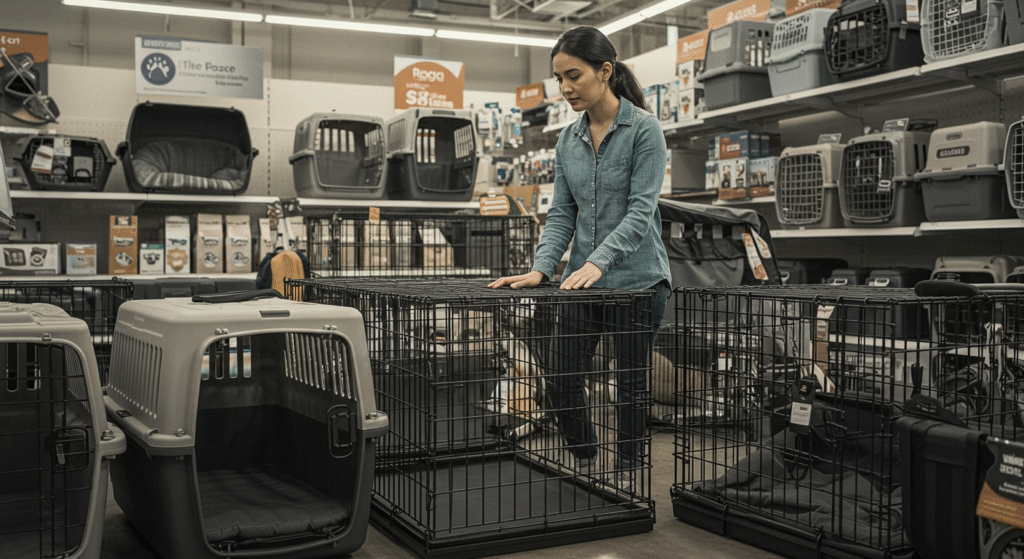
The right dog crate training ensures your dog feels comfortable and safe. Consider the following:
| Type of Crate | Best For | Features |
|---|---|---|
| Wire Crates | Ventilation and visibility | Lightweight, foldable options |
| Plastic Crates | Travel and containment | Enclosed, secure, airline approved |
| Soft-Sided Crates | Small dogs on the go | Portable, easy to store |
| Heavy-Duty Crates | Strong and destructive dogs | Durable, escape-proof design |
| Furniture-Style Crates | Blending with home interiors | Stylish and functional |
- Correct size is crucial—your dog should be able to stand, turn around, and lie down comfortably.
- Measure your dog accurately to determine the proper crate dimensions.
- For puppies, choose adjustable crates with dividers.
- Pick a durable material based on your dog’s chewing habits.
- Ensure the crate has a sturdy latch for security.
- Look for removable trays for easy cleaning.
- Avoid buying a crate that’s too large, as it defeats the purpose.
- Test the crate’s portability, especially if you plan to travel.
- Consider climate—ventilation matters for warmer regions.
- Quality matters—cheap crates may not last long or keep your dog safe.
Steps to Crate Training Success
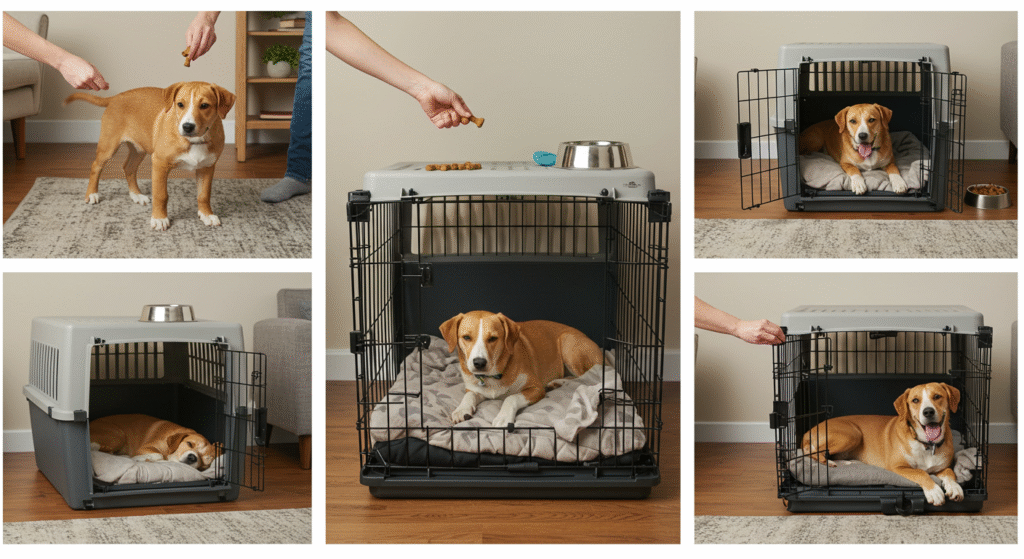
Follow these steps to ensure positive results:
- Introduce the crate gradually—start with the door open.
- Add a comfortable blanket or cushion to make it inviting.
- Place the crate in a quiet but family-oriented area.
- Encourage exploration by tossing treats and toys inside.
- Feed your dog inside the crate to create positive associations.
- Close the crate door for short periods while praising your pup.
- Gradually increase time with the door closed.
- Always associate the crate with positive experiences.
- Never use the crate for punishment—this discourages use.
- Practice patience—consistency is the key to success.
Making the Crate Comfortable
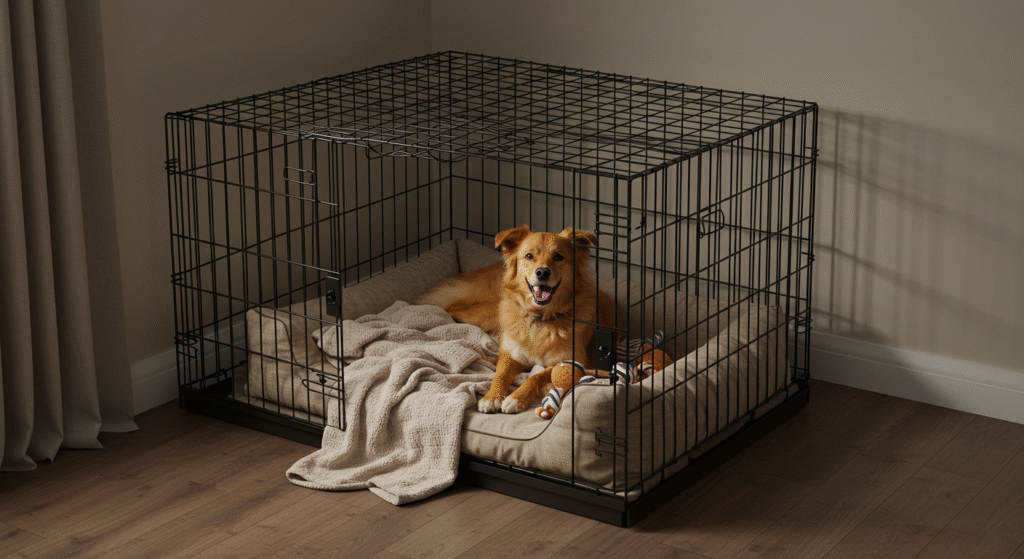
Your dog’s crate should feel like home. Here’s how to create the ultimate cozy den:
- Use soft, washable bedding that fits the crate perfectly.
- Add a non-spill water bowl or dispenser for hydration.
- Avoid overcrowding the space—keep it simple.
- Position the crate away from drafts and direct sunlight.
- Include chew toys to keep your dog entertained and stress-free.
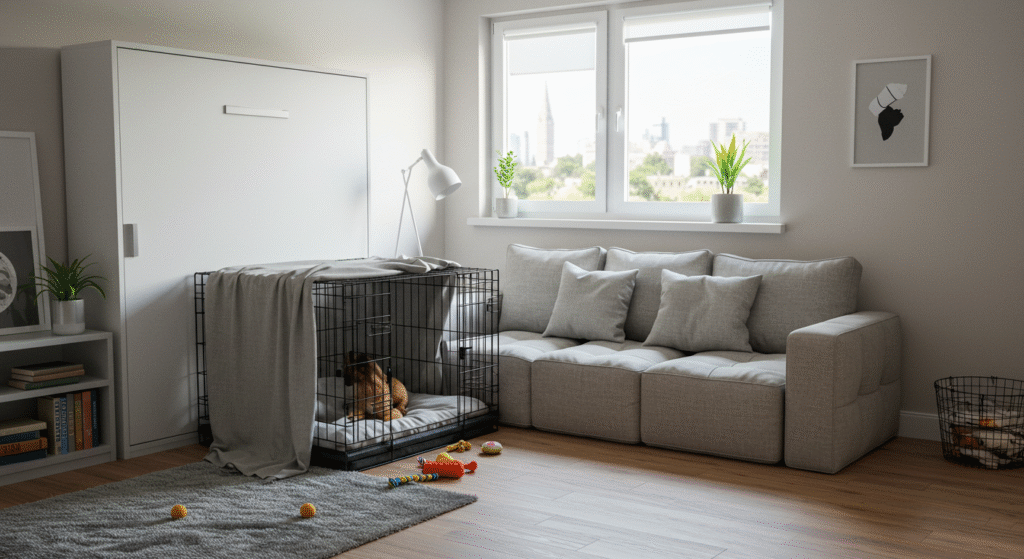
- Add a blanket over the crate for a den-like feel, but maintain airflow.
- Use calming pheromone sprays to help anxious dogs feel at ease.
- Rotate toys periodically to keep the environment stimulating.
- Ensure cleanliness—wash bedding and clean the tray regularly.
- Treat the crate as a positive, safe zone that’s never overwhelming.
Common Mistakes to Avoid
Avoid these pitfalls to ensure successful dog crate training:
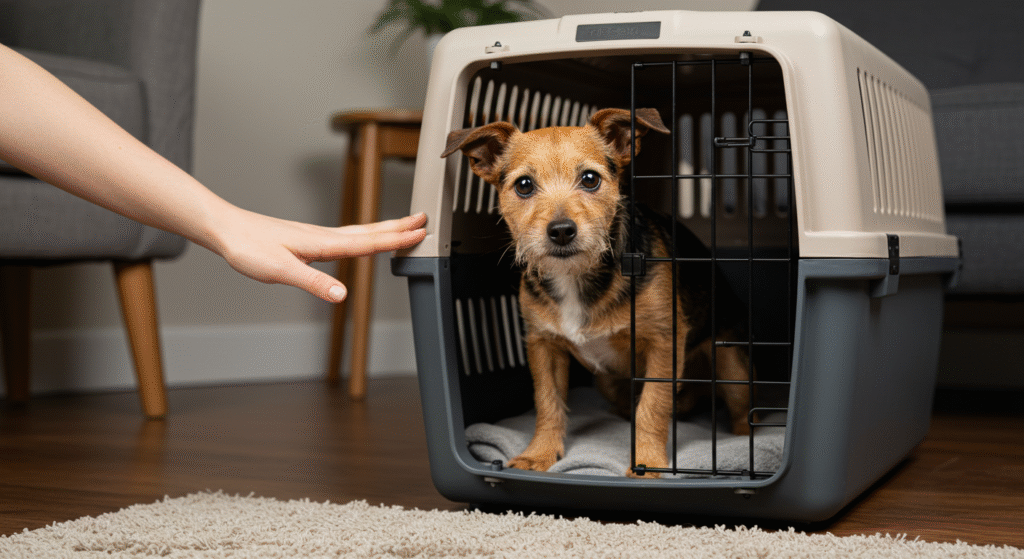
- Never force your dog into the crate—it creates fear.
- Avoid using the crate as a punishment zone.
- Don’t leave a dog in the crate too long or too frequently.
- Overlooking crate size and comfort leads to issues.
- Introducing the crate too late makes adaptation harder.
- Ignoring whining without understanding its cause can backfire.
- Neglecting environmental factors like noise or location impacts comfort.
- Undermining routine—regular use builds trust.
- Failing to secure the crate may lead to escapes.
- Skipping positive reinforcement slows progress.
When and How to Use the Crate
Use crates wisely to maximize their benefits:
- During house training to establish routines.
- For naps or bedtime to encourage restful sleep.
- While traveling, ensuring safety during transit.
- For short-term management during household tasks.
- During stressful events to give your dog a safe haven.
- Gradually increase unsupervised crate time for independence.
- Avoid over-reliance; balance crate time with exercise and interaction.
- Acclimate puppies with frequent short sessions.
- Use the crate for calming overstimulated dogs.
- Monitor your dog’s response and adjust usage accordingly.
The Role of Routine in Crate Training
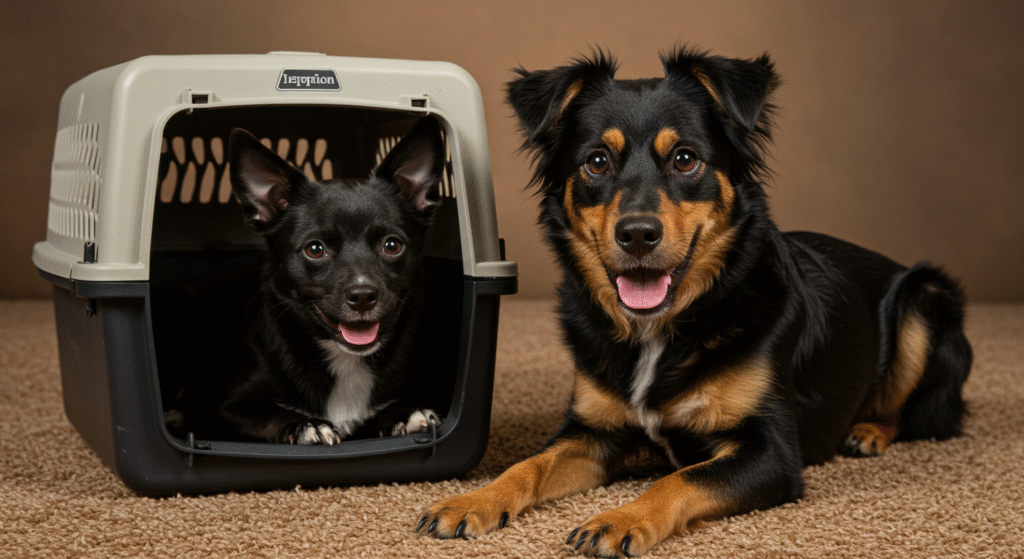
A consistent routine fosters trust and speeds up training:
- Maintain set times for meals, potty breaks, and crate time.
- Avoid putting your dog in the crate randomly—structure is crucial.
- Create positive “crate time” daily to reinforce good habits.
- Stick to regular play and exercise sessions to tire your dog out.
- Predictable routines reduce anxiety and build confidence.
- Avoid disrupting the schedule, as it may confuse your dog.
- Use verbal cues like “crate time” to establish clear associations.
- Pair crate time with treats or toys for predictability.
- Respect your dog’s comfort and adjust the routine as needed.
- Consistency builds a lasting, positive relationship with the crate.
Transitioning Out of the Crate
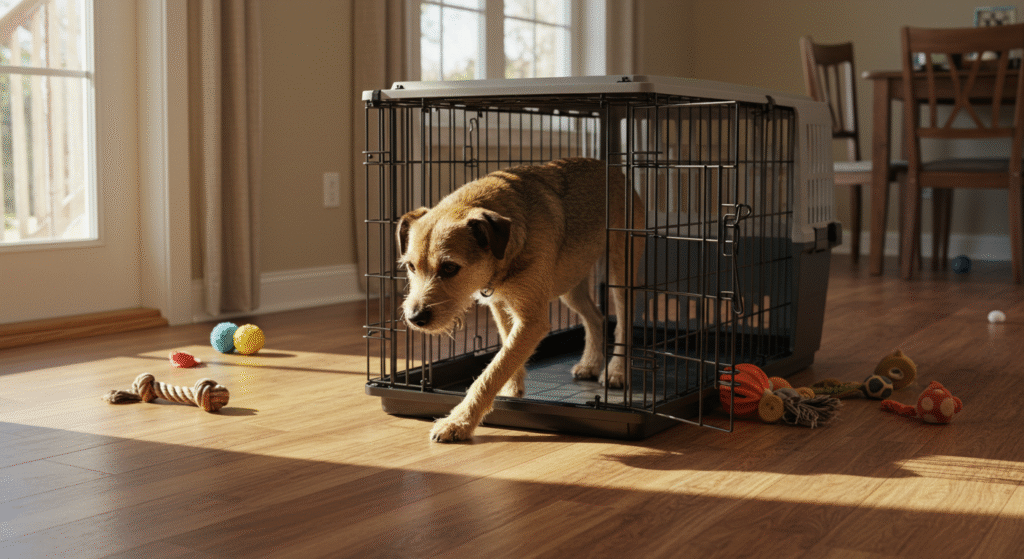
Eventually, many dogs outgrow daily crate use. Here’s how to transition:
- Start by increasing supervised time outside of the crate.
- Leave the crate door open as an option during free time.
- Monitor your dog’s behavior for signs of readiness.
- Gradually reduce the frequency of crate usage.
- Create alternative cozy spaces like beds or playpens.
- Maintain other positive routines and training methods.
- Reinforce house rules while easing reliance on the crate.
- Make sure your dog feels secure in their new freedom.
- Eliminate the crate only when it’s no longer necessary.
- Always prioritize your pet’s comfort and safety during this shift.
Answers to FAQs About Crate Training?
- How long should a dog stay in a crate daily?
While dog crates can be a useful tool, dogs should not be confined for excessive periods. Puppies may need to be crated for no longer than a few hours at a time, while adult dogs can typically handle 4-6 hours. Always ensure your dog gets plenty of exercise, bathroom breaks, and social interaction outside the crate.
2. Is crate training cruel?
When done correctly, crate training is not cruel. It provides dogs with a safe, secure space that mimics their natural instinct to seek a den. The key is to introduce the crate gradually, use positive reinforcement, and never use the crate as a punishment. Ensuring your dog has plenty of time to exercise, play, and bond with you outside the crate is essential to maintaining their well-being.
- What if my dog cries or whines in the crate?
Crying or whining may indicate discomfort or a need for attention. Ensure they’ve been exercised, fed, and had a bathroom break before crating. If the behavior persists, avoid responding immediately to prevent reinforcing the behavior, but address potential issues like anxiety or boredom.
- Can I crate train an older dog?
Yes, you can crate train an older dog! Patience and consistency are key. Introduce the crate gradually by making it a positive space using treats, toys, and comforting bedding. Older dogs may adapt more slowly than puppies, but they can still learn to associate the crate with safety and relaxation.
- Is it okay to use the crate as punishment?
No, the crate should never be used as a form of punishment. It’s important that your dog views the crate as a safe and positive space, not something associated with fear or negativity. Using the crate as a punishment can undo your training progress and create anxiety.
- What size should my dog’s crate be?
A crate should be large enough to allow your dog to stand, turn around, and lie down comfortably. However, it shouldn’t be so large that your dog can use one corner as a bathroom and another for sleeping. Proper sizing ensures comfort and helps with house training.
- How do I transition my dog out of the crate?
Transitioning out of a crate should be gradual. Start by allowing limited freedom in smaller, puppy-proofed areas of your home while monitoring their behavior. Gradually increase their access as they demonstrate reliability.
- Can two dogs share a crate?
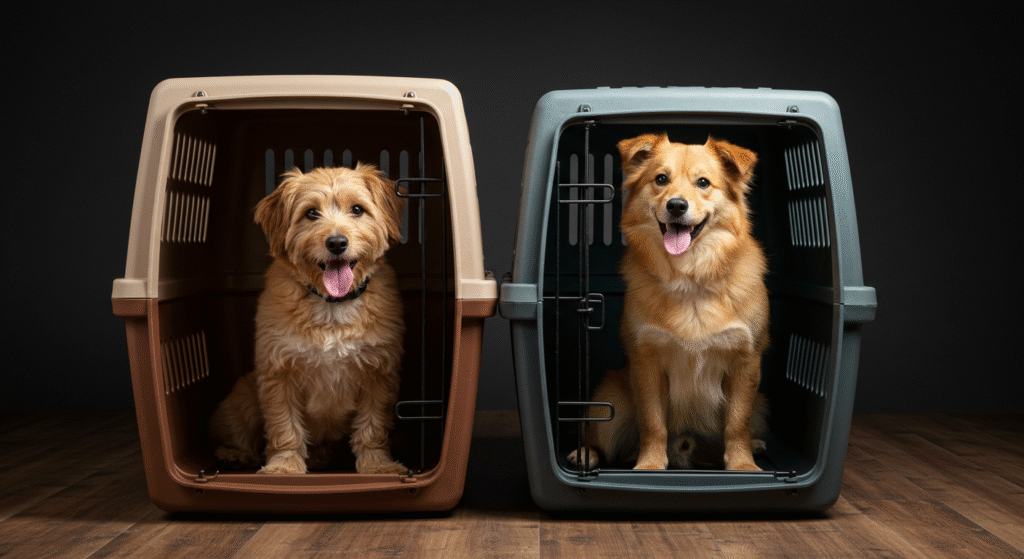
No, it’s generally recommended to provide each dog their own crate. Sharing a crate can lead to conflicts and doesn’t allow each dog a personal safe space to relax without interference.
- How do I make the crate feel more welcoming?
Add cozy bedding, favorite toys, and maybe even a blanket with your scent to make the crate inviting. Placing the crate in a low-traffic but accessible area of the home can also help your dog feel more secure.
- When should I stop using the crate?
You can stop using the crate when your dog consistently demonstrates good behavior and is house-trained. This varies by individual dog, but always ensure that the transition away from the crate is gradual and that your dog feels safe and secure in your home environment.
A crate can be a valuable tool in providing comfort, safety, and structure for your dog when used correctly. Remember, patience and consistency are key to successful crate training.
Always prioritize your dog’s well-being and adjust your approach as needed to ensure they feel happy and secure in your home.